Let me start by saying this: I’ve been in the milling cutter supply game for 12 years, and I’ve sat across the table from more shop foremen, production managers, and hobbyist machinists than I can count—each one telling me the same frustrating story: they bought a “good” cutter, showed up to the job, and within an hour, it was chipped, dull, or leaving burrs so bad they had to spend twice as much time finishing the part. That’s not a “good” cutter. A good quality milling cutter isn’t just a sharp bit of metal that costs a few bucks more than the no-name import. It’s a tool that works as hard as you do, that stays consistent shift after shift, and that makes your job easier—not a new headache. After seeing hundreds of these interactions, I’ve narrowed down the non-negotiable characteristics that separate a cutter you can trust from one you’ll throw in the scrap bin by the end of the week. Milling Cutting
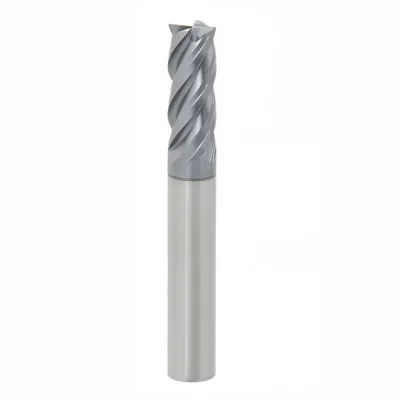
First, let’s talk about the core material—this is non-negotiable. I’ve used everything from high-speed steel (HSS) to solid carbide, and I can tell you right now that generic material is where most suppliers cut corners. A good milling cutter’s body and cutting edges aren’t made from the same cheap steel you’d find in a drill bit at a big-box store. For high-volume, heavy-duty work—think cutting hardened steel, stainless steel, or thick aluminum blocks—solid carbide is the only way to go, but not all carbide is equal. We source our carbide from a mill that produces what’s called fine-grained or ultra-fine-grained carbide, with a cobalt binder content of 8 to 12 percent. Why does that matter? Cobalt adds toughness, and fine grains mean the cutting edge is sharp but not prone to chipping when you hit a spot of slag on a steel workpiece or a unexpected hard spot in a casting. I had a customer last year who was using imported carbide cutters to machine 4140 steel for agricultural equipment parts; they were going through 12 cutters a week because edges were fracturing within 20 minutes of continuous use. We swapped them for our ultra-fine-grained carbide cutters, and they went from 12 a week to 2 a month. That’s not hype—that’s material science working for their bottom line. For lower-heat, lighter-duty work, HSS is fine, but it needs to be M4 or M42 grade, with a coating that adds heat resistance. A lot of cheap HSS cutters come with a generic titanium nitride (TiN) coating that wears off in a day. Our HSS cutters use titanium aluminum nitride (TiAlN) coating, which can handle 1,200 degrees Fahrenheit—enough to keep the edge sharp through hours of milling without built-up edge (BUE) sticking to the tip, which is the #1 cause of rough parts.
Next, the geometry of the cutting edges and the flute design—this is something most buyers never check, and it’s the biggest hidden factor in cutter performance. A milling cutter isn’t just a cylinder with teeth; every angle, every space between the teeth, is engineered for a specific job. Let’s start with rake angle: a positive rake angle (the angle of the cutting face, sloped toward the center of the cutter) makes for a sharper cut, less force on the machine, and less heat. But wait—too positive, and the edge is too fragile; it’ll chip if you push too hard. Our cutters have variable rake angles depending on their use: for soft aluminum, we use a 15-degree positive rake to produce a clean finish without BUE. For hardened steel, we drop that to 8 degrees positive, which trades a tiny bit of sharpness for extra edge stability so it doesn’t chip when cutting hard material. Then there’s the helix angle—most cutters have a helical twist to the cutting teeth, not straight ones. A higher helix angle (35 to 40 degrees) produces a smoother cut and reduces chatter, which is that annoying vibration that leaves wavy marks on your part and can even break the cutter. But again, it’s not one-size-fits-all: high helix is great for finishing, but lower helix (25 to 30 degrees) is better for roughing, because it can handle heavier cuts without the edge pulling out of the workpiece. The flute design matters too: flutes are the spaces between the cutting teeth, where all the chips go. If they’re too small, chips get stuck in the cutter, rub against the workpiece, and create more heat; if they’re too big, there’s not enough material to make the cutter strong. Our roughing cutters have wide, open flutes with a polished surface, so chips evacuate fast even when you’re taking deep cuts. Finishing cutters have slightly narrower flutes to keep the cutter rigid for tight tolerance work. I once visited a aerospace shop that was having trouble with their titanium parts—titanium is a gummy, heat-sensitive material that clogs flutes easily. They were using a standard 4-flute cutter, and chips were welding to the flutes within 5 pieces. We swapped them for a 5-flute cutter with specially designed curved flutes, and they doubled their part output, because chips were clearing before they could cause damage.
Third, runout and balance—this is the make-or-break for consistency, especially in precision work. Runout is when a cutting tooth isn’t perfectly aligned with the center of the cutter, so one tooth is cutting deeper than the others every rotation. A tiny bit of runout (0.001 inches) might not sound like much, but over a 4-inch cutter, that adds up to one tooth cutting 0.002 inches extra per rotation, which will wear that edge out 5 times faster than the others, leave uneven cuts, and even cause machine wear. Good suppliers will test every cutter for runout before it leaves the warehouse; we do a 100% inspection on all our solid carbide and high-performance HSS cutters, and our maximum allowed runout is 0.0005 inches—half the industry standard. Balance goes hand in hand with runout, especially at high spindle speeds, which are common in modern CNC mills. An unbalanced cutter causes vibration, not just bad finish marks, but also wears out your spindle bearings prematurely. We use dynamic balancing machines calibrated to G2.5 standards at 10,000 RPM, which is the balance level required for high-speed machining. I’ve had a customer who runs a 5-axis CNC mill at 15,000 RPM tell me that switching to our balanced cutters reduced their spindle bearing replacement from every 3 months to every 18 months. That’s thousands of dollars saved on maintenance, not just better parts.
Fourth, edge preparation and wear resistance beyond the coating. A lot of people think a sharp cutter is just a newly ground cutter, but the truth is, a micro-ground edge is way more durable than a hand-ground one. Generic cutters often use a honed edge (a tiny radius on the cutting tip) to prevent chipping, but it’s too rounded, which creates more friction and heat. Good quality cutters have a “honed land”—a precise, flat, polished edge on the cutting tip, measured in microns, not thousandths of an inch. For example, our cutters for roughing steel have a 20-micron honed land, which is sharp enough to cut cleanly but tough enough to resist chipping during heavy cuts. For finishing cutters, we use a 10-micron honed land, so the edge is almost as sharp as a freshly ground one, without the brittleness. Then there’s submicron surface finishing on the cutter body. We use a process called abrasive flow machining (AFM) to polish the flute walls and the body of the cutter, so there’s no rough surface where chips can catch or where rust can start. That tiny detail adds up: less chip buildup means longer tool life, no stuck chips scratching your new part, and less time spent clearing jams. I had a job shop customer who was getting small scratches on their stainless steel valve parts, even with a high-quality cutter. We ran a surface finish test on our old vs. new cutter bodies, and the polished AFM surface reduced scratch incidents by 90% because chips didn’t get caught on the rough cutter body and scrape the part.
Wait, let’s talk about something a lot of suppliers don’t mention: consistency across batches. You can have the best cutter on the shelf, but if the next batch is made with slightly lower quality carbide or a thinner coating, it’s useless. For 12 years, we’ve maintained our own in-house metallurgy lab, so we test every incoming batch of carbide, coating, and steel to make sure it meets our specs. We don’t outsource our heat treatment, either—we have our own furnace that controls temperature to within 5 degrees, because heat treatment is what gives carbide its hardness and toughness. A bad heat treatment can make a carbide cutter as brittle as glass, so it chips on the first cut. We have a rule here: if a batch fails any of our tests, we send it back, no exceptions. Early in my career, I learned that lesson the hard way. We had a batch of carbide cutters from a supplier we’d used for years, and 30% of them were chipping after just 10 minutes of use. They’d cut corners on the heat treatment, and instead of sending them back, we tried to sell them at a discount. It came back to bite us—two customers sent them back for refunds, and we lost a big client. That’s when I decided we’d never sacrifice quality for a cheaper batch.
Now, let’s address something else that’s important: versatility. I know a lot of machinists like to have a separate cutter for every job, but most shops don’t have the budget for that. A good quality milling cutter should be able to handle multiple materials, as long as you adjust the speeds and feeds, and it should work with both manual mills and CNC mills. Our general-purpose solid carbide cutters can cut aluminum, steel, cast iron, and even mild titanium, which means you don’t have to stock 10 different cutters for different jobs. That saves money on inventory, and it’s a big reason our cutters are popular with small job shops that don’t have a huge budget for tooling.
At the end of the day, what matters is how your cutter makes your shop look. If your parts come out consistent, with no burrs or rough finishes, your customers are happy. If your cutter lasts twice as long, you’re spending less on tooling, which boosts your profits. If your machine runs smoother, with less vibration and maintenance, you’re getting more production time. A lot of suppliers market cutters as “industrial grade” or “heavy duty,” but when you dig into it, they’re cutting corners on material, geometry, or inspection. That’s not a good cutter. A good milling cutter is one that I’d put in my own shop, that I’d recommend to my brother who runs a small machining business, that I’d stand behind 100%.
If you’re tired of cutters that let you down mid-job, that wear out too fast, or that leave you guessing if this batch will be as good as the last, let’s talk. We can work with your specific applications—whether you’re cutting aluminum for automotive parts, hardened tool steel for molds, or stainless steel for medical devices—and help you pick the right cutter for your needs, no one-size-fits-all nonsense. We also offer custom cutter grinding for specialty jobs, because we know not every part is the same. Don’t settle for a cutter that’s “good enough” for the price. Invest in a tool that works as hard as you do.
Flat End Mill References
- Deboor, C. (2001). The Practice of Milling Tool Design. Industrial Press Inc.
- Shaw, M. C. (2005). Metal Cutting Principles (2nd ed.). Oxford University Press.
- Kalpakjian, S., & Schmid, S. R. (2020). Manufacturing Processes for Engineering Materials (7th ed.). Pearson Education.
- American Society of Mechanical Engineers (ASME). (2018). B94.55M-2018: Milling Cutters – Safety Requirements and Dimensional Specifications. ASME International.
- Cotterell, M., & Byrne, G. (2000). Cutting edge preparation and its effect on carbide tool performance. Journal of Materials Processing Technology, 100(1-3), 158-166.
Small Craftsman (Shandong) Machine & Tools Co., Ltd.
Small Craftsman (Shandong) Machine & Tools Co., Ltd. is one of the most experienced milling cutting manufacturers and suppliers in China, also supports customized service with low price. Please feel free to buy bulk high quality milling cutting in stock here from our factory. Contact us for pricelist.
Address: No.9 Quanxin Rd., Sishui Economic Developing Zone, Jining, Shandong, China.
E-mail: 6196@ocutchina.com
WebSite: https://www.ocutooling.com/
