If you’ve ever worked with carbon steel bars—whether for construction, manufacturing, or heavy machinery parts—you know that their ability to hold up under repeated stress is non-negotiable. As a carbon steel bar supplier who’s spent 12 years in this industry, I’ve seen too many projects go sideways because a batch of “strong” steel bars failed prematurely under cyclic loading. That’s why testing fatigue strength isn’t just a step we check off in our quality control; it’s the backbone of every bar we ship. If you’re new to this, or just want to make sure you’re asking the right questions when vetting steel suppliers, let’s walk through what fatigue strength actually means, how we test it, and why it matters for your application. Carbon Steel Bar
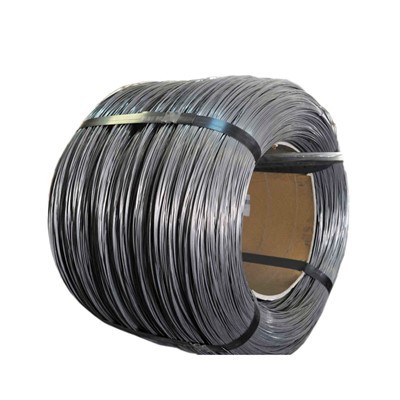
First, let’s get clear on the basics: fatigue strength is the maximum stress a carbon steel bar can withstand for a specific number of load cycles without breaking. Unlike tensile strength, which measures how much force it takes to snap the bar in one go, fatigue strength is about small, repeated stresses—like a bridge support that flexes thousands of times a day, or a tractor axle that spins millions of times in a season. Carbon steel’s fatigue performance depends on its grade, microstructure, surface finish, and even residual stresses from processing, which is why one batch of SAE 1045 might outperform another if it’s been heat-treated or milled differently.
I’ve had customers come to me saying, “My last supplier’s bars passed a tensile test, but they cracked after 6 months.” That’s exactly the gap fatigue testing fills. Tensile tests are quick and give a hard number, but they don’t tell you how the bar will hold up when it’s stressed over and over. For example, a steel bar used to anchor a wind turbine tower will experience thousands of load cycles every time the wind blows, so a high tensile strength is useless if it can’t survive 10 million (or more) cycles without failure.
Now, let’s talk about how we actually test fatigue strength at our facility. This isn’t some one-off lab trick—it’s a standardized, data-driven process that we refine every year based on industry updates. The first step is always sample preparation, and this is where cutting corners can skew results. We don’t just grab a random bar from production to test; we follow ASTM E466, the standard guide for conducting force-controlled axial fatigue tests of metallic materials. That means every test sample is a 10-inch-long carbon steel bar, machined to tight tolerances (no rough edges, no tool marks that could act as stress risers) and inspected for any pre-existing defects like inclusions or micro-cracks with ultrasonic testing first. If a sample has a tiny flaw before we even start, that’s going to make the test results meaningless—flaws that would have never caused a failure in real service, but show up as a false “weakness” in the lab.
Next, we use a servo-hydraulic fatigue testing machine. These are the workhorses of our quality lab, and they let us apply precise, repeatable cyclic loads to the sample. The machine clamps the bar at both ends, then pulls and pushes it at a set frequency—usually between 1 and 100 Hz, depending on the expected service cycle rate for the grade we’re testing. For carbon steel, we typically run tests at a load ratio (the minimum load divided by the maximum load applied) of 0.1, which simulates real-world tension-only loads like a support bar holding up a roof. For applications that see alternating tension and compression, like a shovel blade, we use a load ratio of -1 to test both extremes.
The core of fatigue testing is the S-N curve, or stress-life curve. Here’s how that works: we take a group of identical samples (usually 6 to 8, to get statistically significant data) and apply a different maximum stress level to each. For example, we might run one sample at 70% of the bar’s tensile strength, another at 60%, another at 50%, and so on. We count how many cycles each sample takes to fail, and plot those points on a graph with stress on the y-axis and number of cycles (log scale, because it’s a huge range) on the x-axis. For carbon steel, what we look for is the fatigue limit—also called the endurance limit. That’s the stress level below which the bar will never fail, even after an infinite number of cycles (we run tests up to 10 million cycles for carbon steel, since beyond that, fatigue failure is extremely rare for most grades). If the S-N curve flattens out at that 10 million cycle mark, that’s our fatigue limit for that specific carbon steel bar.
Wait, I know what some of you are thinking: “Why not just use the tensile strength number to guess fatigue?” That’s a common mistake I see new engineers make. Fatigue limit for carbon steel is roughly 40-50% of its tensile strength, but that’s a rough average. Our SAE 1045 carbon steel bars, for example, have a tensile strength of 600 MPa, but our fatigue limit is 280 MPa—right in that range. But if the bar has a rough surface finish from poor machining, that drops the fatigue limit by as much as 20%, because the surface scratches act as tiny cracks that grow faster under load. That’s why sample preparation is so critical—when we test, we’re not just testing the material, we’re testing how our process produces that material.
We also do bend fatigue tests, depending on the application. For carbon steel bars that will be bent repeatedly, like leaf springs or axle parts, axial tension isn’t the only stress to consider. Bend fatigue tests use a different setup, where we load the bar at a midpoint, causing it to flex, and count cycles to failure. This simulates the bending stresses a bar would see in service, and gives us a more accurate number for parts that aren’t under straight axial load. Last year, a customer came to us with a problem where their axle bars were failing after 200,000 cycles. We ran bend fatigue tests on their original supplier’s bars and found their fatigue limit was 220 MPa, while our bars of the same grade had a bend fatigue limit of 275 MPa—we traced the difference to our surface grinding process, which removes the sharp mill scale that acts as a stress raiser.
Another thing we test for is corrosion fatigue, if the bars will be used in outdoor or marine environments. Carbon steel rusts, and corrosion pits act as stress concentrations that make fatigue failure way more likely. For these tests, we expose the sample to a salt spray environment (per ASTM B117) while running the fatigue cycles, to simulate real-world corrosive conditions. That’s a step many smaller suppliers skip, which is why their bars fail early in applications like bridge railings or offshore support structures.
Now, let’s talk about what these test results mean for you, the customer. If your project requires a carbon steel bar for a part that will see 1 million cycles or more, you can’t just rely on a tensile test. For example, a construction crane hook: it lifts heavy loads thousands of times a month, so its bars need a fatigue limit that’s proven to hold up over 10 million cycles. When we supply bars to crane manufacturers, we provide the S-N curve and fatigue limit test data as part of our quality certificate, so their engineers can design the crane to stay within safe stress levels.
I’ve also learned over the years that testing doesn’t stop in our lab. We do in-service performance checks too. Last year, a customer who uses our SAE 1020 carbon steel bars for agricultural plows sent us back a worn bar that had been in use for 3 years. We cut a sample from the middle of it and ran fatigue tests, and found that even after 10 million cycles, its fatigue limit was still 90% of the original lab test result. That gave us the confidence to adjust our heat treatment process slightly, so the bars would hold up even better under farm field conditions.
But here’s the honest truth: not all fatigue testing is equal. Some smaller suppliers will cut corners to save money—they might run only 2 samples instead of 6, use a lower test cycle count than the industry standard, or machine samples poorly to get a “good” result. That’s why as a customer, you should never take a supplier’s test results at face value. Ask for their standard testing methods, what load ratio they use, how many samples they test, and what test standard they follow (ASTM, ISO, or another recognized body). If a supplier can’t produce that data, or says “we don’t test fatigue for our standard bars,” that’s a red flag.
For example, we recently had a customer who switched to a cheaper supplier because their bars were $0.10 per bar less. They came back 8 months later with 12 failed bars from their conveyor system. When we tested the cheaper supplier’s bars, we found their fatigue limit was 190 MPa, compared to our 280 MPa—they’d run tests at only 1 million cycles, not the standard 10 million, so the bars would pass a quick test but fail in actual service over longer cycles. That $0.10 per bar difference ended up costing them $15,000 in replacement parts and downtime.
So, what should you look for when choosing a carbon steel bar supplier? First, ask about their fatigue testing protocol. Do they follow recognized standards? Do they provide detailed test data, not just a “passed/failed” stamp? Do they test for the specific conditions your bar will face (corrosion, bending, axial load)? And most importantly, do they have a track record of supplying bars that perform as advertised in real-world applications?
At the end of the day, carbon steel bars are the backbone of so much of modern industry, from skyscrapers to farm equipment to wind turbines. Their fatigue strength isn’t just a technical specification—it’s what keeps people safe, keeps projects on track, and prevents costly downtime. As someone who’s been in this industry for over a decade, I’ve seen firsthand how testing fatigue strength isn’t just a step for us; it’s our promise to every customer that the bars they get will work as hard as they need to, for as long as they need them to.

If you’re working on a project that needs reliable carbon steel bars, and you want to make sure you’re getting ones that have been rigorously tested for fatigue strength to fit your specific application, we’d be happy to walk you through our testing process, share our latest test data, or work with you to customize bars for your unique needs. We don’t cut corners on testing, because we know that your success depends on the quality of the steel we ship.
Carbon Steel Strip References
ASTM E466 – Standard Guide for Conducting Force Controlled Constant Amplitude Axial Fatigue Tests of Metallic Materials
ASTM B117 – Standard Practice for Operating Salt Spray (Fog) Apparatus
ASM International. (2019). Fatigue of Carbon Steels. Metals Handbook, Volume 11: Failure Analysis and Prevention.
Shanxi Midas Industrial Co., Ltd.
We’re known as one of the most professional carbon steel bar manufacturers and suppliers in China. With abundant experience, we warmly welcome you to buy cheap carbon steel bar made in China here from our factory. For price consultation, contact us.
Address: 28th, Huanqiu Jinrong Zhongxin, Xieyuan Road, Changfeng Business District, Taiyuan City, Shanxi Province, China
E-mail: midassteel@163.com
WebSite: https://www.midassteel.com/
