If you’ve ever spent time around industrial power setups, you know three-phase oil-immersed transformers are the unsung heroes keeping lights on, factories running, and data centers cool. As someone who’s been in the three-phase oil immersed transformer game for over a decade—answering late-night calls from plant managers whose transformers just threw a fit, troubleshooting on-site, and tweaking designs to hold up in harsh weather—I can tell you: a transformer’s only as good as its protection gear. Skip the right safeguards, and you’re not just risking downtime—you’re risking fires, destroyed equipment, and the kind of headaches that keep procurement managers up at 2 a.m. Today, we’re breaking down exactly what protects these workhorses, why each part matters, and how choosing the right gear (no, not the cheap knockoff off Alibaba) saves you way more in the long run. Three Phase Oil Immersed Transformer
First, let’s ground this: three-phase oil-immersed transformers don’t just sit there converting high-voltage power from the grid to the stuff your equipment can use. They’re submerged in mineral oil (sometimes ester oil these days) that cools them down and insulates the windings. But that oil’s not just a passive material—it’s the transformer’s blood, basically. Every protection device we’re talking about is either keeping that oil healthy, stopping electrical faults before they blow, or catching a problem so early you can fix it on a scheduled maintenance call, not a crisis dispatch.
Let’s start with the big one that no transformer leaves the factory without: Buchholz relays. If you’ve never heard of one, think of it as a tiny transformer internal cop, split into two chambers: the top one with a float, the bottom with a flap. Here’s how it works. Minor faults—like a loose connection that’s just starting to arc, or tiny winding overheating—produce small amounts of gas. That gas rises up the transformer tank’s conservator (the big oil tank on top) and flows into the Buchholz relay. When enough gas builds up, it pushes the float up, breaking a contact that sends a warning alert to your control room. No fire, no blown fuses—just a heads-up to schedule an inspection before it gets bad. If the fault gets way worse—like a full short circuit inside the tank—your oil boils, produces huge volumes of gas, and that gas surges so fast it slams into the flap at the bottom. The flap gets hit hard, breaking a different contact that triggers an immediate shutdown. I’ve seen a Buchholz relay catch a minor arc in a 2000 kVA unit last year in a food processing plant—they caught a bad connection on a tap changer before it burned through the winding. If that had gone, they would’ve been down for 3 days, losing thousands in production. This stuff isn’t overkill—it’s peace of mind.
Next up: pressure relief valves. These are the transformer’s emergency pressure vent, plain and simple. When a massive internal fault happens—say, a full phase-to-phase short circuit—the oil and insulation inside heat up so fast they turn to gas instantly, creating pressure in the tank. Way too much pressure, and the tank can rupture. I’m not talking a little leak—rupture sends hot oil spraying 50 feet, starts fires, and turns a $50k transformer into a $150k cleanup. The pressure relief valve is set at a specific psi (usually around 15 for medium-voltage units) that’s safe for the tank’s design. When pressure hits that number, it pops open—blowing a metal disc or a spring-loaded seal—and vents all the excess gas and pressure to the air outside. No rupture, no oil everywhere. Just make sure you install them correctly—point the vent away from walkways or other equipment. I once saw a cheap unit where the tech pointed the vent toward a parking lot; when it popped, it hit a delivery truck’s windshield, no injuries but a very expensive bill. Always pay attention to that vent direction.
Now, let’s talk electrical protection, because all the oil and gas sensors don’t mean jack if an electrical fault fries the windings first. The main ones here: overcurrent relays and fuses, but wait—we don’t just use regular fuses. For three-phase transformers, we have differential relays too, which are way more precise. Let’s break it down. Overcurrent relays trigger when current going through the transformer is higher than it should be—from a short circuit, an overload, or a ground fault. But basic overcurrent relays can be slow, right? Not the good ones we spec—we use time-delay overcurrent relays that let minor overloads (like starting a big motor) pass without tripping, but snap fast for actual faults. Then there’s the differential relay: it compares the current entering the transformer on the high side to the current leaving on the low side. If those two don’t match—say, current is leaving that shouldn’t be (that’s a winding fault inside the tank)—the differential relay trips instantly. No waiting, no messing around. We pair that with fuses on the secondary side too, for lower-voltage circuits—they’re the last line of defense. If the transformer’s low side gets a huge surge, the fuse blows before it can damage any of your downstream equipment, like motors or controllers. I learned this lesson early in my career: a client tried to skip the differential relay on a 500 kVA unit to save $800. Six months later, a faulty cable shorted inside the transformer, the overcurrent relay took 2 seconds to trip, and by then the winding was fried. They ended up paying $6000 for a new transformer, plus downtime costs that were way worse. Always pay for the good protection gear.
We can’t forget temperature sensors, either. The oil’s job is to cool the transformer, so if the oil gets too hot, that means something’s wrong. We use RTDs—resistance temperature detectors, basically little probes that sit in the oil or on the winding— that send real-time temp data to your control system. Most units I supply have a high-temp alarm set at 85°C, and a trip at 95°C. Why those numbers? Mineral oil starts breaking down around 105°C, right? So we give a heads-up before that. If the temp hits 85, you check the cooling fans (most oil-immersed units have fans for higher loads) or the load on the transformer. I had a factory client last summer who thought their transformer was overloaded, but the temp sensor actually caught a dirty radiator coil that was blocking airflow. They cleaned it for $200, avoided overheating the transformer, and didn’t have to replace any insulation. Those sensors don’t just protect the transformer—they help you maintain it, which saves money over time.
Wait, what about when the transformer’s sitting outside, exposed to the elements? Moisture gets in the oil, and that’s the worst for insulation. So we have moisture detectors (sometimes called moisture monitors) and silica gel breathers. The conservator tank isn’t sealed—when the transformer heats up, oil expands, and air gets pushed out; when it cools, air gets sucked in. If that air has moisture (from rain, humidity, whatever), it gets into the oil and lowers its insulation strength. The silica gel breather is a little canister full of blue silica gel that’s packed in the air line to the conservator. It absorbs moisture from the air before it gets in. When the gel turns pink, you replace it—super simple, takes 10 minutes, no tech needed. And the moisture detector is a sensor that measures the moisture content in the oil directly. Most standards say you want less than 30 parts per million (ppm) of moisture in the oil. If it’s higher than that, you can do an oil dryout or filter it, no need to replace the whole transformer. I’ve seen a client whose breather was left unmonitored, and moisture levels hit 100 ppm. The oil’s insulation was shot, but we filtered it and replaced the gel, saved them $12k on a new unit. That’s the kind of small, cheap gear that prevents big bills.
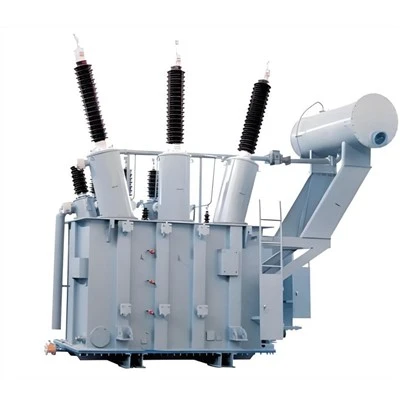
Let’s also touch on surge arresters. Power lines get hit by lightning all the time, right? A big surge from a lightning strike can travel down the line and blast through the transformer’s windings, destroying them instantly. Surge arresters (sometimes called lightning arresters) are installed on the primary side of the transformer, right where the power comes in. They look like ceramic cylinders, and they’re designed to divert that extra surge of electricity to the ground before it can get into the transformer. We size them specifically for the transformer’s voltage—can’t use a 12 kV arrester on a 24 kV unit, that won’t work. Last year, a farm client in a remote area had a lightning hit their power line; their surge arrester worked exactly as it should, and the transformer was fine. If they didn’t have it, they would’ve been without power for a week during harvest season. Surge arresters are one of those things people don’t think about until they need them, but they’re non-negotiable.
Hold on—there’s also ground fault protection, specifically for the secondary side. Wait, three-phase systems can have single-phase loads, right? Like lighting or power for outlets. If one of those single-phase circuits shorts to ground, that’s a ground fault. If it’s not caught, it can throw off the balance of the three phases in the transformer, overheat the windings, or even cause a shock hazard for anyone working on the equipment. We use ground fault relays that trip if there’s an imbalance in current—if the current on the three phases doesn’t add up to zero, that means current is flowing to ground somewhere, and the relay shuts it down. That’s not just protecting the transformer—it’s protecting your people too. No one wants someone getting shocked because a faulty outlet’s drawing ground current.
Let’s be real here: a lot of clients cut corners on protection gear because it’s not the transformer itself. But I’ve been doing this long enough to know that every dollar you save on cheap, wrong protection gear is going to cost you way more in downtime, repairs, or replacement. Let’s say you spec a 1000 kVA three-phase oil-immersed transformer for a manufacturing plant. The transformer itself is $18k. A Buchholz relay is $300, pressure relief valve $250, differential relay $1200, temp sensors $150, surge arrester $200, silica gel breather $50. That’s less than $2200 total for all that protection. Skip it, and if a fault hits, you’re looking at $20k+ for a new transformer, plus $5k a day in lost production. That’s a no-brainer.
Now, when you’re working with a supplier, make sure they don’t just throw on whatever protection is cheapest. Ask questions: do they use DIN-standard Buchholz relays? What’s the pressure rating on the relief valve? Is the differential relay set for your specific load? Do they test the surge arrester before shipping? I’ve had clients come to me after buying a transformer from a fly-by-night supplier in another state, and the Buchholz relay was sized wrong—too small, so it wouldn’t catch a major gas buildup, or too big, so it tripped for minor gas that wasn’t even a fault. We fix that, but it would’ve been avoided if they worked with someone who knows their stuff, not just cuts and pastes designs.
A quick note too: these protection devices aren’t “set it and forget it.” You need to do regular checks—test the Buchholz relay every year, check the silica gel breather monthly, calibrate the temp sensors every two years. But that’s part of owning a transformer, right? It’s not a set-it-and-leave-it piece of equipment, it’s a working part of your power system that needs care.
At the end of the day, three-phase oil-immersed transformers are built to be tough, but even the best design can’t survive without the right protection. Whether you’re powering a factory, a data center, a farm, or a small business, those devices I talked about are the difference between a transformer that runs for 20 years without a hiccup and one that dies in 2 years after a tiny, preventable fault.
Electric Furnace Transformer If you’re in the market for a new three-phase oil immersed transformer, or you need to upgrade the protection on an existing one, hit me up. I’m here to walk you through what your specific setup needs, no sales pitch, no pressure, just straight talk from someone who’s been in the trenches with these things for years. We’ll make sure you get the right gear, installed right, so you don’t have to stress about downtime or repairs down the line.
References
- IEEE Std C57.12.00, Standard for General Requirements for Liquid-Immersed Distribution, Power, and Regulating Transformers.
- NEMA Standards Publication TP 1, Guide for the Installation and Maintenance of Oil-Immersed Transformers.
- Electrical Safety Authority, “Protection Devices for Medium-Voltage Transformers”, 2021.
- International Electrotechnical Commission (IEC) 60076-5, Power Transformers – Part 5: Ability to withstand short circuit.
Zhejiang Jiangshan Hengli Electrical Co., Ltd.
Zhejiang Jiangshan Hengli Electrical Co., Ltd. is one of the most professional three phase oil immersed transformer manufacturers and suppliers in China, featured by quality products and low price. Please rest assured to wholesale cheap three phase oil immersed transformer in stock here and get pricelist from our factory. Customized orders are welcome.
Address: 212 Fuzhu Street Sidu Town, Jiangshan, Zhejiang, China
E-mail: henglijs@foxmail.com
WebSite: https://www.henlypower.com/
