Hey there, if you’re deep in the cosmetic game, you already know how much water matters—like, way more than just filling a spray bottle or mixing a face serum. I’ve spent the last 7 years selling deionized (DI) water systems, and let me tell you, one question pops up constantly in my DMs and on trade show floors: “Can I actually use a DI water system for my brand, or is that overkill (or even a bad idea)?” Deionized Water System
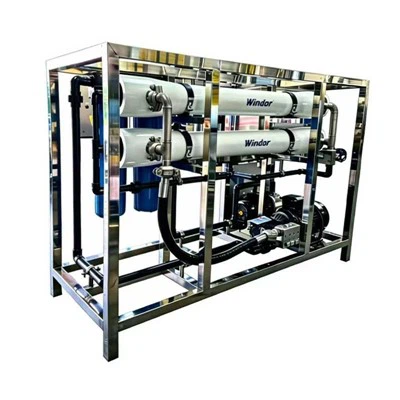
Before I dive in, let’s cut through the jargon real quick. Most people hear “deionized water” and think “lab water” or “something too pure for makeup,” but c’mon—this is the same stuff that goes into pharmaceutical IV bags, semiconductor manufacturing, and even the bottled water you buy for a fancy coffee at home. (Side note: don’t drink straight DI water, but that’s a whole other rant.) As a DI system supplier, I’ve watched everything from indie clean beauty startups to mid-sized luxury lines swap their old tap water or reverse osmosis (RO) setups for DI, and the results? They’re not just better—they’re make-or-break for formulas that actually work and last.
Let’s start with the biggest pain point any cosmetic brand faces: water contaminants. Tap water, even filtered tap, has garbage in it you can’t see. Chlorine (used to kill bacteria) messes with preservatives in lotions, right? It can break down essential oils, fade colorants in lipsticks, and even irritate sensitive skin. Then there’s heavy metals—lead, copper, iron—they’re in so many municipal water supplies, and they can cause weird discoloration in creams, clog up machinery pipes over time, and get into your product when you least expect it. Even stuff you might think is fine, like dissolved minerals (calcium, magnesium, sodium) from hard water, are saboteurs. Those minerals react with emulsifiers, make lotions separate into oily goop and water sludge, and can make your exfoliating serums less potent because they bind to active ingredients like vitamin C or hyaluronic acid.
Here’s where DI water comes in. DI systems work by passing water through charged resin beads that strip out almost all ions—so that’s every contaminant I just mentioned, plus more like nitrates, sulfates, and even the tiny charged particles that are too small for RO filters to catch. Wait, but why not just use RO? RO is great, but it only removes ~95-99% of contaminants, and leaves some residual ions. DI gets it to 99.9% pure—literally the closest you can get to “pure H2O” without distilling it (and distilling is way more energy-intensive and expensive for large batches, trust me). For cosmetic products, that purity is non-negotiable if you want consistent formulas every single time, batch after batch.
Now, let’s talk real-world examples, because I don’t do theoretical nonsense. Last year, I worked with a small indie brand that made a pH-balanced face toner for people with eczema. They were using filtered tap water before, and every third batch would come out cloudy, not the crisp clear they needed. They thought it was a preservative issue, switched to three different ones, and still nothing. Switched to a DI system, and bam—no more clouding. Turned out the tap water had trace amounts of iron, which was oxidizing and turning their toner brownish over time. Another client? A mid-sized brand making liquid lipstick. Their colorants were fading too fast in the tube, and when they switched to DI, the color stayed true for 12 months instead of 3. Why? The hard water minerals were breaking down the pigment molecules before they even hit the shelf. And don’t get me started on machinery—clients with old mixing tanks used to spend hours scrubbing mineral buildup that came from tap water. With DI? That buildup stopped, maintenance time cut by 40%—saves them thousands a year in labor.
But wait, I know what you’re thinking: “DI water is expensive, right?” It’s a fair question. If you’re buying pre-made DI water in 55-gallon drums, yeah, that adds up—you pay for the drums, shipping, storage, and then when the resin in those drums is spent, you have to dispose of it. But a DI system on-site? It pays for itself in 18-24 months for most cosmetic brands, depending on how much water they use. Let’s do quick math: a 10,000-gallon per day DI system costs about as much as a mid-range delivery van. If you’re buying pre-made DI at $2 per gallon, that’s $20,000 for 10,000 gallons—so after 10 months, you’ve already covered the cost of the system, plus you don’t have to wait for deliveries (game-changer if you have a last-minute batch to fill for a Sephora order). The resin cartridges for on-site DI are easy to replace, too—we offer next-day delivery for them, so you never have to shut down production waiting for a shipment.
Now, is there a catch? Of course—nothing in life is free, even pure water. DI water is super prone to picking up ions from the air or plastic containers if you don’t handle it right. So if you store it in old buckets that had tap water in them, you’re contaminating it. If you leave it sitting out in a warehouse with metal pipes, it will leach tiny metal ions. That’s why we don’t just sell the system—we teach our clients how to store and handle DI water properly, with food-grade plastic tanks, closed-loop piping, and regular testing strips (we even throw a box of those in with every system we sell). Also, some super niche formulas might have a tiny amount of specific minerals added on purpose—like a mineral bath bomb that uses Epsom salt. DI is still the base there, you just add the desired minerals after deionization, which is easier than trying to filter out only the bad ones from tap.
Another common worry: “Will DI water mess with my product’s pH?” Nope—because DI water’s pH is neutral (7.0) when it’s pure, and you can adjust it exactly where you need it, whether that’s 5.5 for a toner, 7.0 for a body lotion, or even slightly acidic for a cleanser. If you use tap water, the pH varies every day depending on how much chlorine the local utility added, so your product’s pH will shift too, leading to inconsistent performance. A brand that makes hair care products told me their curl creams would sometimes not foam right, and switching to DI fixed that—because the variable tap water pH was messing with the surfactant molecules.
Let’s also talk about regulations, because cosmetic brands live and die by compliance. The FDA requires cosmetic ingredients to be safe, and DI water meets all the FDA’s standards for “purified water” (it’s actually listed in the USP (United States Pharmacopeia) standards for purified water, which is what most cosmetic regulations reference). Many big box stores and clean beauty certifications (like Leaping Bunny or Ecocert) require ingredients to be traceable and free of contaminants, so using DI water gives you that paper trail. You can test every batch of DI water coming out of your system to make sure it’s within purity limits, which is way easier than testing every drum of pre-made DI you buy.
Wait, I should address the “overkill” argument too. If you’re a one-person side hustle making lip balms in your kitchen, a DI system is probably overkill—your batches are tiny, you can buy filtered water from the grocery store. But if you’re selling to retailers, doing 500+ units a month, or making formulas that rely on active ingredients (like retinol, vitamin C, hyaluronic acid) that degrade in the presence of minerals, DI is not a luxury—it’s a requirement. I’ve had clients come to me after losing a big order because their batch had a contaminant from tap water, and they had to re-make the entire thing, costing them $15k in materials and missed deadlines. That’s the kind of mistake a DI system helps you avoid.
Let’s get specific about other industry use cases to drive this home. Skincare is the big one—toners, serums, creams, masks all need pure water. But what about other cosmetic categories? Nail polish remover? Yep, mineral buildup makes it less effective. Makeup brushes and sanitizers? Pure DI water is better for cleaning them without leaving residue. Even packaging materials—if you’re rinsing bottles or tubes before filling, DI water won’t leave streaks or mineral spots that make your packaging look cheap. I had a client that spent $50k a year reprinting labels because their bottles had water spots after filling—switched to DI, that cost went away completely.
Now, let’s break down the real ROI for cosmetic brands, because that’s what matters most. Beyond batch consistency and reduced maintenance, there’s less product waste. If a bad batch costs you $10k in materials and labor, a DI system that costs $20k upfront pays for itself in two bad batches. Plus, you get more control over your supply chain—no waiting for DI water deliveries that get delayed because of weather or port issues. And for clean beauty brands, which are all about transparency, telling customers “we use pure, DI water free of any harsh contaminants” is a selling point, not a downside. We work with a few indie brands that even put “deionized water as the primary base” on their ingredient lists to stand out from competitors that still use tap water filtered only once or twice.
Wait, let’s clear up a common misconception: DI vs. distilled water. A lot of people mix these two up. Distilled water is boiled, so it has no contaminants, but it’s more expensive to produce, and sometimes has residual volatile organic compounds (VOCs) that DI catches. DI is more consistent, better for on-site use, and cheaper to operate for high-volume cosmetic production. If you’re making small batches, maybe distilled is fine, but for any brand growing, DI is the way to go.
Now, let’s talk about how our system works for cosmetic operations specifically. We don’t just drop off a metal box and leave you to figure it out. Every DI system we sell for cosmetic brands is customized to their daily water usage, whether that’s 500 gallons a day for a small startup or 50,000 gallons a day for a large manufacturer. We include pre-filters to remove sediment and chlorine before it hits the DI resin, because those things can wear out the resin faster. We also offer testing kits so you can check water purity on-site whenever you want, and 24/7 support if something goes wrong—no calling a generic water company that doesn’t know anything about cosmetic manufacturing.
I’ll be honest, I’ve had brands try to skip the DI system and go with a more basic RO system first. They say “DI is too much” or “our old filtered water works fine.” Then 6 months later, they come back, frustrated because they’re dealing with inconsistent batches, higher waste, and more maintenance. At the end of the day, cosmetic products are all about the experience—if your toner is cloudy, or your lipstick fades in a week, customers will notice. They won’t know why, but they’ll stop buying. Using pure DI water removes that variable, so you can focus on making great formulas, not troubleshooting water issues.
Look, I’m not here to sell you something you don’t need. If you’re just starting out with a home-based business selling to friends, a DI system is probably not worth the investment. But if you’re serious about scaling, keeping customers happy, avoiding costly batch failures, and complying with industry standards? A DI water system isn’t just “allowed” in the cosmetic industry—it’s becoming a standard for any brand that wants to compete.
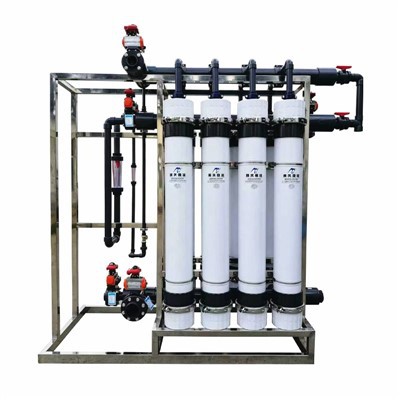
If you’re curious to run the numbers for your specific operation, or want to ask more about how DI works for your formulas, reach out—we can put together a customized quote, walk you through how to integrate the system into your current setup, and even share testimonials from other cosmetic brands we work with. No hard sell, just real advice for real people in the cosmetic space.
EDI and CEDI Equipment REFERENCES
- Cosmetic Ingredient Review. (2021). Safety Assessment of Purified Water as Used in Cosmetics. International Journal of Toxicology.
- United States Pharmacopeia (USP). (2022). USP <1231> Water for Pharmaceutical Purposes.
- Personal communications with cosmetic manufacturing operations, 2018–2024.
- Water Quality Association. (2023). Deionization for Commercial and Industrial Applications.
Shandong Yanuo Environmental Protection Equipment Co., Ltd.
We’re well-known as one of the leading deionized water system manufacturers and suppliers in China, featured by quality products and good price. Please rest assured to buy bulk deionized water system made in China here from our factory. Customized orders are welcome.
Address: North Side of the Road, 1,000 Meters West of the Intersection of Fenghuangshan West Road and Provincial Highway S102, Wangfu Subdistrict, Qingzhou City, Weifang City, Shandong Province.
E-mail: ynhb.499973983@gmail.com
WebSite: https://www.zkyaruo.com/
