Hey everyone, and welcome back to the stuff I actually geeking out over in the bike parts world—this time it’s something most riders just glance at when buying a new stem, adjusting their existing one, or swapping parts on a whim. I get it, when you’re staring at a pair of new carbon wheels or testing out fresh brakes, the stem’s probably the last thing on your mind. But as someone who’s spent the last 8 years sourcing, testing, and selling bike stems (full transparency: I run a small, no-BS bike parts supply shop), I’m here to tell you that this tiny part is way more critical to your bike’s feel than you think—especially when it comes to center of gravity (CoG). And before you go “wait, center of gravity? Isn’t that just for rocket science or something big?” nope, it applies to every two-wheeled rig you throw a leg over, whether it’s a 10lb road bike you race on weekends or a burly mountain bike that’s seen way too many root gardens. Bike Stem
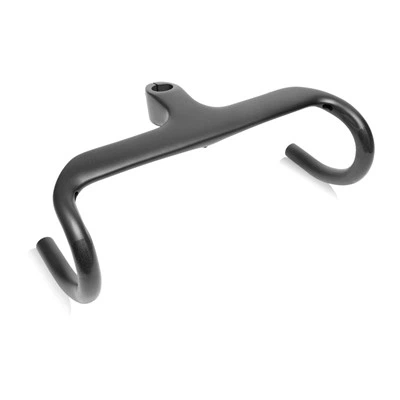
Let’s start with the basics, no fancy physics textbook jargon, I promise. Center of gravity is basically the point on your bike (and body, but we’ll tie those two together later) where all its weight feels like it’s concentrated. That’s the sweet spot that determines how your bike handles: is it twitchy when you lean into a corner? Does it feel stable at 40mph on a straight road? Can you bunny hop that 2-inch curb without face-planting? All that comes down to where that CoG sits relative to the wheels, the contact point between your bike and the ground.
Now, the bike stem itself—for anyone who’s not super mechanical, that’s the part that connects your handlebars to your fork’s steerer tube, right? It’s not just a clamp that holds your bars; it’s a short (or sometimes longer) metal or carbon tube that sets how far forward your bars are from the fork, and how high or low they sit, depending on the rise. Most riders just pick a stem based on “oh, this looks cool” or “my old one broke, let’s get the same size again”—but changing the length, rise, or even the material of your stem is one of the easiest, most impactful ways to shift that CoG, and it’s way simpler than re-tuning your entire bike frame.
Let’s break down length first, because that’s the biggest CoG changer for most casual riders and racers alike. Think about it: if your stem is shorter, your handlebars are closer to the front wheel and the center of your bike. That pulls the weight of your upper body (since most of us carry like 60% of our weight on the front half of the bike) forward, right? Wait, no—wait, let’s get that straight. If a stem is shorter, the bars are in a more forward position relative to the seat tube? No, actually, let’s do a quick mental test. Grab your current bike, stand over it, hands on the bars. If you put a 20mm shorter stem on, your hands move 20mm closer to the head tube (the part where the fork connects to the frame). That means your entire upper body is now an extra 20mm closer to the front wheel. So the front end of the bike gets a little heavier, and the rear end gets a little lighter. That changes CoG because the overall combined weight (bike + you) is now shifted slightly forward relative to the wheelbase (the distance between front and rear wheels).
What does that feel like? If you’re a mountain biker, a shorter stem is a game-changer for technical trails. When you’re hitting rock gardens or trying to lift the back wheel over an obstacle, a slightly heavier front end makes that less of a fight—you don’t have to fight to keep the front wheel down when you don’t want it to, and when you do want to wheelie, the lighter rear end makes that snap easier. For road cyclists, a shorter stem can make the bike feel more responsive in corners—you can flick the bars side to side faster because the CoG is closer to the front axle, so there’s less “lever arm” between the front wheel and your hands. That’s why time trial riders and criterium racers run shorter stems than casual road riders; they want that quick, snappy feel for tight packs.
But wait, longer stems? That’s the other side of the coin. A longer stem moves your bars farther forward, so your upper body stretches out a bit. That shifts the combined CoG a little toward the rear wheel, right? So front end gets lighter, rear gets heavier. For road riders, that’s the setup for aerodynamics—you’re in a more tucked position, less wind resistance. But if you go too long, you end up with a so-called “wheelie bar” where the front end is so light that hitting a small pothole can send it veering left or right, and you might struggle to keep the front wheel down on steep climbs. For mountain bikers, a longer stem is sometimes used for high-speed desert riding or gravel grinders, where stability on straight, fast sections matters more than quick maneuverability. You don’t want a twitchy front end when you’re holding 30mph over washboards, right?
Now, rise—most stems come with a rise number, like 0 degrees, 6 degrees, 17 degrees, whatever. That’s how much the bars angle up (or down, if you run a negative rise) relative to the fork. How does that affect CoG? Let’s think about vertical weight distribution, not just forward/back. If you run a higher rise stem, your handlebars are higher up, so your upper body sits higher. Wait, hold on—no, the stem is between the fork and bars, so if you have a 17-degree rise, the bars are 17mm higher at the center than the base of the stem. So higher bars mean your torso is more upright, right? That raises the overall CoG of you and the bike. Higher CoG means the bike feels more tippy in tight corners, more likely to swap ends if you hit a big bump while leaning. Lower rise stems (or negative rise, which actually point the bars down) drop the handlebars, so your torso is more horizontal, lowering the combined CoG. That makes the bike feel more stable, because the weight is closer to the ground. That’s why downhill mountain bikers run super low, negative rise stems—they want that super low, planted feel when they’re bombing a 40-degree slope at 50mph. Even casual riders on road bikes who want a more aggressive, stable position will go for a 0 or negative rise stem instead of a high 10-degree one.
Then there’s material, which I talk about all the time with my customers. Stems come in aluminum, carbon, even titanium these days. Does the material itself affect CoG? Wait, only a tiny bit, but it’s a thing. Carbon is lighter than aluminum, right? So a carbon stem is a few ounces lighter than an aluminum one. If you’re shifting weight away from the front end, that can make the front end a little lighter, which—wait, but only a few ounces, that’s not a game-changer. But here’s the catch: some carbon stems are built with different layups that change their weight distribution. Like, a stem that’s heavier at the clamp end (where it connects to the bars) vs. the steerer tube end (connecting to the fork). If you have a stem that’s heavier at the bars, that adds a little weight to the front of the bars, which can effectively lower the front CoG a tiny bit. Most riders won’t notice a difference between a good carbon stem and a mid-tier aluminum one, but for pro racers or guys who weigh their parts down to the gram, that’s a detail they obsess over.
Wait, but let’s bring this back to real riders, not pro teams testing in wind tunnels. I had a customer last month—guys name’s Jake, he rides a hardtail mountain bike, uses it to hit local trails with big jumps and tight switchbacks. He came to me saying his bike felt “too front-heavy” when he was trying to manual, like he was always fighting to keep the back wheel up. He was running a 70mm stem, 10-degree rise, aluminum. I suggested he try a 50mm stem (so 20mm shorter) with a 0-degree rise instead. He texted me three days later saying it was like a whole new bike. The front end was still planted enough for rough downhills, but the lighter rear end made manuals so much easier, and he was nailing the switchbacks way faster because the bike wasn’t so twitchy, not sluggish. That’s exactly the kind of CoG shift we’re talking about—small change in stem length, big change in how the bike feels when you’re riding it.
Another common mistake I see: riders mixing stem rise with their frame’s head tube angle. A lot of people don’t know that your frame’s head tube angle (the angle between the fork and the ground) already sets a baseline bar height. If your frame has a slacker head tube (common on long-travel mountain bikes, like 65 degrees), that means the fork points farther forward, so a higher rise stem might not give you more upright position—it might make your bars feel too high. If you pair a slacker head tube with a short, low-rise stem, you get a lower CoG that’s perfect for technical terrain, because the bike’s already stable from the slacker angle, and the stem drops the weight even closer to the ground. For steeper head tube angles (like on a cross-country mountain bike, 71 degrees or more), a slightly longer stem with a mild rise keeps the CoG balanced so you don’t get a twitchy feel on climbs.
Wait, let’s clear up a myth I hear all the time: “stem length changes my wheelbase.” No, not really. Wheelbase is the distance between the front and rear axles, that’s set by your frame. The stem length adjusts how far your hands are from the head tube, which changes the position of your body relative to the frame, which shifts the CoG—not the wheelbase. That’s a big difference. A lot of new riders think if they get a longer stem, their wheelbase gets longer, making the bike more stable, but actually, the wheelbase stays exactly the same. The stability comes from the CoG shifting toward the rear, not the wheelbase itself. That’s a key point that even some bike shops get wrong, so I always make sure to explain it to my customers.
Now, let’s talk about when CoG matters most. If you’re just cruising around the neighborhood at 10mph, you’ll barely notice a difference between a 50mm and 70mm stem. But once you start riding harder—going fast, hitting obstacles, leaning into corners, doing tricks—those small stem adjustments add up. I had a road customer, Lisa, who was training for a metric century, and she kept complaining that her back was killing her halfway through rides. She was running a stem that was way too long for her frame, so she was stretching too far forward, raising her CoG, and hunching her back to compensate. We swapped her to a slightly shorter stem, and a lower rise, which let her sit up a little more, lowered her overall CoG, and fixed her back pain. She finished her century with no issues, and said her bike felt so much smoother on the flats. That’s another example of how stem CoG affects not just handling, but your comfort too.
What about things to watch out for when adjusting your stem? It’s not just about picking a random length. You have to make sure it’s compatible with your steerer tube size—most modern bikes are 1 1/8”, but some mountain bikes use 1.5” or oversized steerer tubes. And don’t go too short, either! If your stem is like 30mm, that’s fine for BMX, but on a full-size bike, you can end up with super twitchy handling, and if you crash, your hands are way too close to the front wheel, which can lead to injuries. Same with going too long—if your stem is 120mm on a bike that’s designed for a 70-90mm stem, you’re shifting too much weight to the rear, making it hard to control the front end in corners and on climbs.
Here’s a pro tip I give all my customers: before you buy a new stem, test if you can adjust your current stem’s spacers to get the feel you want. Spacers are the little aluminum or carbon rings that go under your stem, between the stem and the fork. If you add spacers, that raises your handlebars, which is like running a higher rise stem, and if you remove spacers, you can run a lower rise (or even negative rise) stem, which drops your bars. You can also flip your stem—most stems can be installed upsidedown, which turns a 6-degree rise into a 6-degree drop, effectively. That’s a free test to see if you like the feel of a lower CoG before you drop money on a new stem. I’ve had so many customers try flipping their stem first, and they decide they don’t even need a new one—game, set, match.
Now, why does this matter for a stem supplier like me? Because I don’t just sell parts. I sell solutions. A lot of big part brands just slap a cool design on a stem and call it a day, but at the end of the day, the best stems are the ones that help riders get their CoG right, so they ride safer, faster, and more comfortably. I’ve tested hundreds of stems over the years, and I can tell you that the best value stems aren’t always the most expensive carbon ones—they’re the ones with consistent manufacturing, so their length and rise are accurate (no one wants a 70mm stem that’s actually 75mm, that messes up your CoG) and strong enough to handle whatever you throw at it.
I get questions every week from riders asking “what stem should I get?” and the first thing I ask them is what they ride, where they ride, and how they like their bike to feel. A trail rider needs a different stem than a road racer, and a casual commuter needs something totally different. For example, a commuter who rides around town at 15mph needs a stem that’s balanced—so not too short (twitchy) or too long (sluggish), with a mild rise so they can sit upright, keep their CoG low, and stay in control in stop-and-go traffic. A gravel rider might go for a slightly longer stem to get that stable feel on long stretches of dirt, but still with enough rise to be comfortable on rough gravel roads.
If you’re reading this, and you’ve never thought about how your stem affects your bike’s CoG, I challenge you to make one small change: either adjust your stem’s spacers, flip it, or if you’re ready for an upgrade, try a different length or rise next time you need a new stem. You might be surprised how much of a difference it makes, way more than swapping out a set of handlebars or a saddle.

And if you’re in the market for a new stem—whether you’re a casual rider looking for a better commute, a mountain biker chasing better trail handling, or a racer trying to shave seconds off your lap times—hit me up for a chat. I don’t do hard sells, I just give straight, honest advice based on years of testing and helping hundreds of riders get their setup right. No jargon, no confusing fine print, just parts that work, and info that makes sense for your bike and your riding style.
Mountain Bike Handlebar References:
- Wilson, D. G., & Papadopoulos, J. (2004). Bicycling Science (3rd ed.). The MIT Press.
- Burke, E. R. (1996). Science of Cycling. Human Kinetics.
- Mountain Bike Action Magazine. (2022). “Stem Length and Rise: How They Transform Trail Handling.”
- Road Bike Rider. (2021). “Understanding Bike Fit: Stem Geometry and Center of Gravity.”
- International Bicycle Fund. (2019). “Bike Handling Basics: Center of Gravity and Wheelbase.”
Hunan Yecheng Technology Co., Ltd.
We’re well-known as one of the leading bike stem manufacturers and suppliers in China, also support customized service. Please feel free to buy high quality bike stem for sale here from our factory. For more information, contact us now.
Address: Changsha, Hunan Province, China.
E-mail: info@rxlsl.com
WebSite: https://www.rxlsl.com/
